Quick Overview
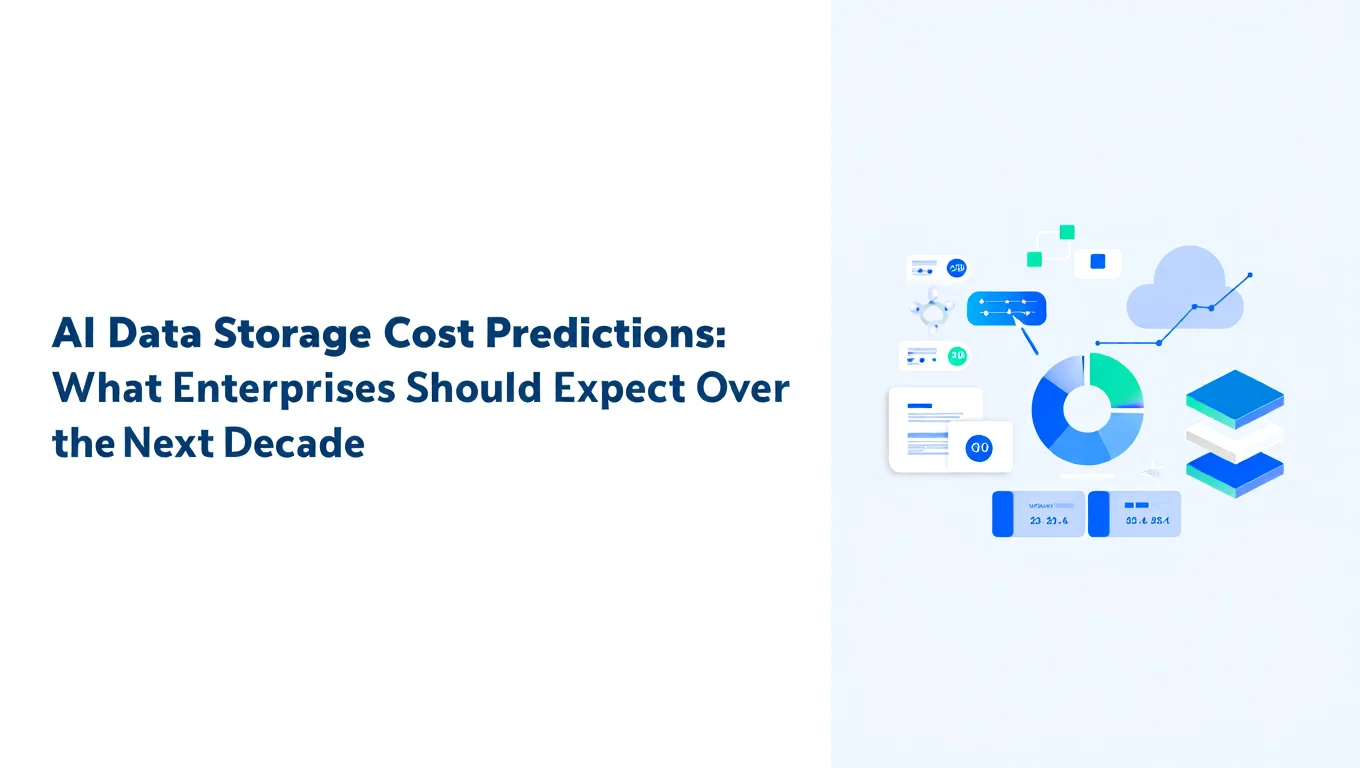
As artificial intelligence continues to scale across enterprises, data storage costs are becoming a major strategic consideration. AI systems generate, process, and retain massive volumes of data, increasing demand for high-performance, compliant, and scalable storage solutions. While the cost per gigabyte of storage is expected to decline, total storage spending will rise due to exponential data growth, real-time AI workloads, and long-term data retention requirements.
This article explores future data storage cost predictions for AI, highlighting short-term, mid-term, and long-term trends. It also explains how organizations can control costs through smarter architecture, automation, and expert guidance from AI Strategy Consulting.
Artificial Intelligence (AI) is rapidly becoming a core driver of digital transformation across industries. From predictive analytics and automation to generative AI and real-time decision systems, organizations are deploying AI at scale. However, as AI capabilities expand, so do the data storage demands that support them. In the coming years, data storage costs will play a critical role in determining how successfully enterprises can scale AI initiatives.
Understanding future storage cost trends is essential for technology leaders, particularly those working with AI Strategy Consulting, Enterprise AI Consulting, and AI Automation Consulting Services, as storage decisions directly impact performance, compliance, and long-term return on investment.
Why AI Is Redefining Data Storage Economics
Unlike traditional enterprise applications, AI systems are data-intensive by design. They require large volumes of structured and unstructured data for training, validation, deployment, and continuous learning. These datasets often need to be retained for extended periods to support model retraining, auditing, and regulatory requirements.
Key AI-driven storage factors include:
- Massive training datasets for machine learning and deep learning models
- Continuous data ingestion from sensors, applications, and user interactions
- Storage of multiple model versions and checkpoints
- High-speed access requirements for real-time inference
As a result, AI is no longer just consuming storage it is reshaping how storage is designed, priced, and managed.
Short-Term Storage Cost Outlook
In the near term, overall storage cost per gigabyte is expected to continue declining, following long-standing industry trends. However, this does not mean enterprise storage spending will decrease.
AI adoption is driving:
- Higher demand for high-performance storage (NVMe, SSD, low-latency cloud tiers)
- Increased use of cloud object storage for large AI datasets
- More frequent data replication for resilience and compliance
This combination means that while individual storage units may become cheaper, total storage spend will rise, particularly for organizations scaling AI workloads without a defined data lifecycle strategy.
This is where AI Strategy Consulting becomes essential, helping enterprises forecast realistic storage growth tied directly to AI initiatives rather than raw data accumulation.
Mid-Term Predictions: Storage Costs Will Shift, Not Disappear
Over the next 3–5 years, AI storage costs will become more predictable but more complex. Enterprises will increasingly adopt tiered storage models to balance cost and performance.
Key trends expected during this phase include:
1. Tiered and Hybrid Storage as the Standard
AI data will no longer sit in a single environment. Instead:
- Frequently accessed AI data will remain on high-performance storage
- Inactive or historical data will move to lower-cost cloud or archival tiers
- On-premises and cloud systems will operate together
Designing these architectures requires expertise from an AI and Automation Consultant, ensuring that data moves intelligently without impacting model performance.
2. Cloud Pricing Optimization Becomes Critical
Cloud providers will continue offering competitive pricing, but AI workloads often trigger hidden costs, such as:
- Data egress fees
- High-frequency access charges
- Cross-region replication expenses
Organizations relying on Enterprise AI Consulting will be better positioned to negotiate pricing models, reserved capacity, and multi-cloud strategies that reduce long-term exposure.
3. Storage Efficiency Gains Through Automation
AI-driven storage optimization tools will become mainstream. These systems can:
- Automatically classify data by usage patterns
- Archive or compress low-value data
- Predict future storage demand
Many of these capabilities are implemented through AI Automation Consulting Services, helping enterprises reduce waste without manual intervention.
Long-Term Outlook: Total Spend Will Increase, Efficiency Will Improve
Looking beyond five years, the dominant trend is clear: AI-related data volumes will continue to grow exponentially. Even with technological improvements, enterprises should expect overall storage spending to increase.
However, the nature of that spending will change:
- Less investment in raw capacity alone
- More focus on intelligent data management
- Greater reliance on automation and predictive analytics
Future storage environments will be designed to support AI workloads natively, integrating compute, storage, and data governance into unified platforms. Strategic planning with AI Strategy Consulting will be crucial to avoid fragmented systems that inflate costs over time.
The Hidden Costs Many Organizations Overlook
When predicting AI storage costs, many organizations focus only on capacity pricing. In reality, the total cost of ownership includes several overlooked components:
- Data governance and compliance storage
- Backup and disaster recovery infrastructure
- Security and encryption overhead
- Performance tuning and monitoring systems
AI systems amplify these costs because they operate continuously and generate data at scale. Engaging an experienced AI and Automation Consultant helps organizations model these hidden expenses early, preventing budget overruns later.
How AI Consulting Helps Control Storage Costs
Storage cost optimization is no longer just an IT concern; it is a strategic business issue. This is where consulting services deliver measurable value.
AI Strategy Consulting
Helps organizations:
- Align AI initiatives with realistic data growth projections
- Design storage architectures that scale sustainably
- Avoid over-provisioning high-cost storage tiers
AI Automation Consulting Services
Focus on:
- Automated data tiering and archiving
- Intelligent monitoring and cost optimization
- Reducing manual storage management overhead
Enterprise AI Consulting
Supports:
- Large-scale AI deployments with multi-department data needs
- Compliance-ready storage designs
- Long-term infrastructure roadmaps aligned with business goals
Together, these services ensure that AI storage investments are intentional, efficient, and future-ready.
Practical Steps Enterprises Should Take Now
To prepare for rising AI storage costs, organizations should take proactive action:
- Assess Current AI Data Usage
Identify what data is actively used versus rarely accessed. - Define Data Retention Policies
Not all AI data needs to be stored indefinitely. - Adopt Tiered Storage Early
Waiting until costs spike makes optimization harder. - Automate Where Possible
Manual data management does not scale with AI growth. - Work With AI Consulting Experts
Strategic guidance reduces costly architectural mistakes.
Organizations that take these steps with support from Enterprise AI Consulting partners will be far better positioned to scale AI responsibly.
Conclusion: Storage Costs Will Grow, Strategy Will Define Success
The coming years will bring unprecedented growth in AI-driven data. While storage technology will continue to improve, total data storage costs for AI will rise, driven by scale, performance requirements, and compliance needs.
The difference between organizations that struggle and those that succeed will come down to strategy. With the right combination of AI Strategy Consulting, AI Automation Consulting Services, and guidance from an experienced AI and Automation Consultant, enterprises can turn storage from a cost burden into a competitive advantage.
AI is not just transforming how businesses operate it is transforming how they store, manage, and value data. Planning for that future today is no longer optional; it is essential.